
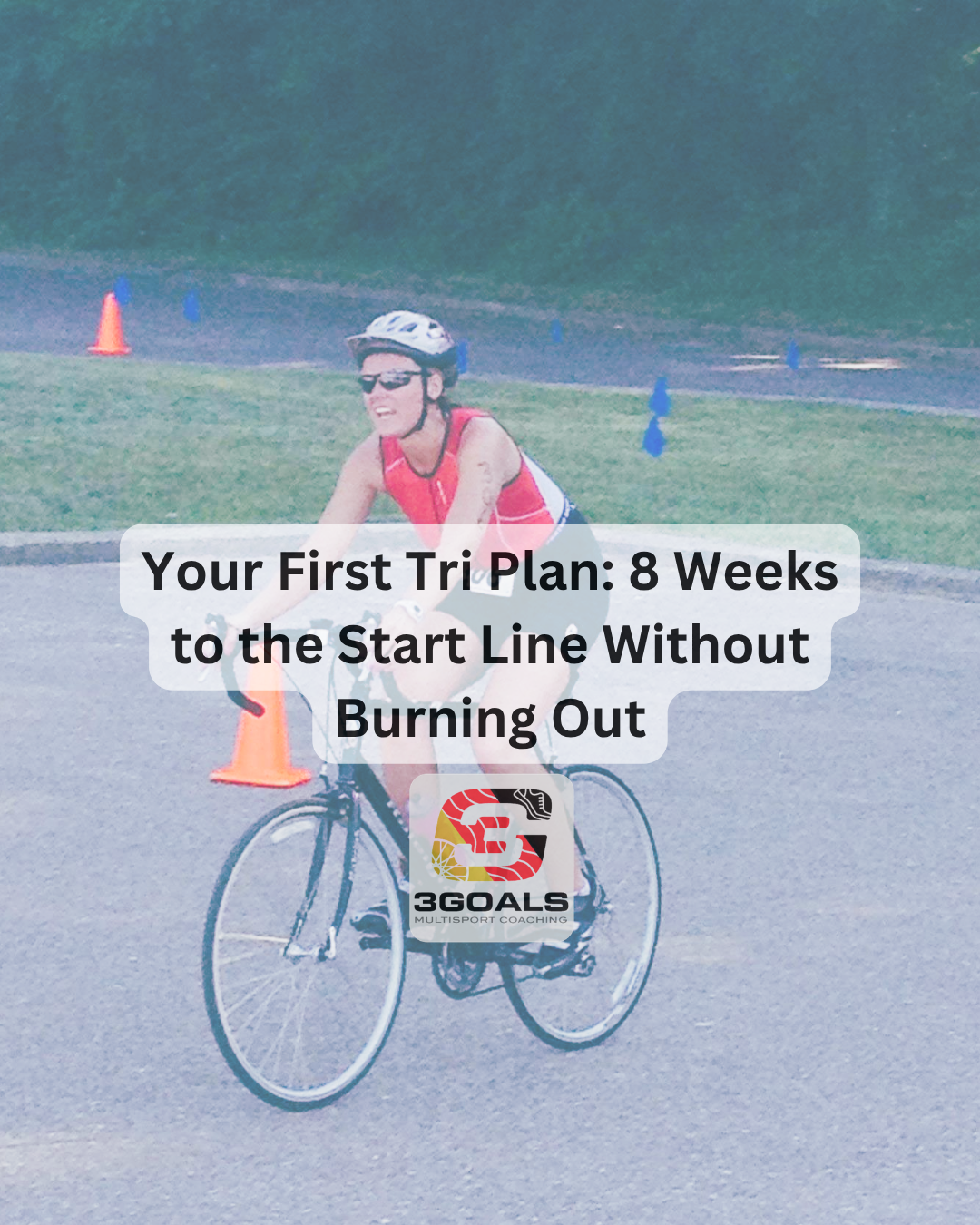
Your First Tri Plan: 8 Weeks to the Start Line Without Burning Out
So you signed up for your first triathlon.
Or maybe you are thinking about signing up, but your brain is already spiraling:
How do I train for three sports?
How many workouts do I need?
What if I miss a day?
What if I am not ready?
Take a breath.
Your first triathlon plan does not need to be complicated, extreme, or all-consuming. It needs to be realistic enough that you can follow it, structured enough that you know what matters, and flexible enough that life does not completely derail you.
Because the goal is not to arrive at the start line exhausted.
The goal is to arrive prepared, confident, and proud that you showed up.
What Is an 8-Week First Triathlon Plan?
An 8-week first triathlon plan is a short, structured training approach that helps beginners prepare for the swim, bike, and run without trying to do everything at once.
It should help you build consistency, practice race-day skills, and gradually prepare your body for the demands of race day.
It should not make you feel like triathlon has taken over your entire life.
For most beginners, the best plan is not the hardest plan. It is the plan you can actually follow.
Before You Start: Keep It Simple
If this is your first triathlon, your job is not to train like everyone else.
Your job is to build a steady foundation.
That means focusing on:
- Showing up consistently
- Practicing each sport
- Learning how your body responds
- Keeping easy days easy
- Building confidence before race day
If you are still gathering gear, start with the beginner triathlon starter kit so you know what you actually need and what you can skip.
You do not need perfect equipment, perfect fitness, or a perfect schedule.
You need a starting point.
Week 1: Get Oriented
The first week is not about proving yourself.
It is about learning what training looks like in real life.
Your goal this week is to complete short, manageable sessions in each discipline and figure out how training fits into your normal schedule.
Focus on:
- One swim
- One bike
- One run
- One optional strength, mobility, or recovery session
This is also a great week to look at your calendar and be honest about your availability. A plan only works if it fits your actual life.
Week 2: Build a Rhythm
Week 2 is where you start creating consistency.
You do not need huge workouts. You need repeatable ones.
This week, aim to create a basic rhythm with swim, bike, and run sessions spread across the week. If one sport feels more intimidating, keep that session short and approachable instead of avoiding it completely.
This is especially true for the swim. Confidence grows through exposure, not panic.
Your goal is simple:
Show up. Keep it manageable. Repeat.
Week 3: Stay Out of the Gray Zone
By Week 3, many beginners make the same mistake.
Everything becomes medium-hard.
The easy workouts are too hard. The harder workouts are not really focused. Recovery gets skipped. Suddenly, every session feels like a grind.
That is the gray zone trap.
Your easy days matter because they help you absorb the work and build aerobic fitness without burning through your energy. If you are not sure how easy is easy enough, revisit How to Make Easy Days Easy.
Training smarter does not mean doing more.
It means doing the right work at the right effort.
Week 4: Practice Transitions
At the halfway point, it is time to start thinking beyond swim, bike, and run as separate workouts.
Triathlon is about putting them together.
This does not mean you need a massive brick (bike+run) workout. It can be as simple as a short bike followed by a short, easy run so your body learns what it feels like to run off the bike.
You can also start practicing your transition setup.
Think about:
- Where your helmet goes
- How you will lay out your shoes
- What nutrition you need
- How you will move from one discipline to the next
If race-day gear stresses you out, grab the free triathlon packing list so you are not guessing the night before your race.
Week 5: Build Confidence, Not Panic
Week 5 is often where race day starts to feel real.
This is when nerves can creep in, and that is completely normal.
Your job is not to eliminate nerves. Your job is to create a simple plan so nerves do not run the show.
That means practicing:
- What effort you want to use in each sport
- What you will eat and drink
- What cue you will use when things feel hard
- What you will do if something goes wrong
This is where Race Day Calm matters. The more decisions you make before race day, the fewer decisions you have to make when your brain is tired.
Week 6: Rehearse the Basics
Week 6 is a great time for a simple race rehearsal.
Not an all-out race simulation.
A rehearsal.
Practice the pieces:
- Wear the gear you plan to race in
- Try your race-day breakfast
- Practice your fueling
- Do a short bike-to-run
- Set up your transition area at home
This is also a good week to double-check your packing list and make sure nothing feels unfamiliar.
Race day confidence comes from reducing surprises.
Week 7: Practice Pacing
Week 7 is not the time to suddenly prove your fitness.
It is the time to practice control.
Beginners often blow up because they start too hard, chase other athletes, or let excitement take over. That is why pacing matters so much.
Your race-day pacing plan should be simple:
- Swim steady and calm
- Bike controlled, not heroic
- Start the run easier than you think you should
- Build only if you still feel good
If you need more on this, read Pacing for Beginners before race week.
The goal is not to win the first few minutes.
The goal is to finish proud.
Week 8: Taper, Trust, and Show Up
Race week is where a lot of beginners get nervous and want to cram.
Don’t.
You are not trying to gain fitness in the final few days. You are trying to arrive rested, organized, and ready.
This week, focus on:
- Short, easy movement
- Sleep
- Hydration
- Packing early
- Reviewing your race plan
- Trusting the work you have done
Do not add random extra workouts because you feel anxious.
More is not better right now.
Ready is better.
What If You Miss a Workout?
You probably will.
That does not mean your plan is ruined.
Missing one workout does not erase your training. The bigger mistake is trying to cram missed workouts into the next day and turning one missed session into a whole week of fatigue.
If you miss a workout, ask:
- Is this workout important to race readiness?
- Can I move it without stacking too much stress?
- Should I just let it go and stay on track?
Most of the time, the best choice is to move forward.
Consistency over perfection wins.
Use the 3 Goals Method for Your First Triathlon
One of the best things you can do before your first race is set more than one goal.
Not because you are lowering the bar.
Because race day is unpredictable, and you deserve more than one way to feel proud.
Here is how that might look:
Rockstar Goal: Finish feeling strong and execute your full pacing and fueling plan.
Super Happy Goal: Stay steady, avoid panic, and keep moving forward even when it gets hard.
Happy Goal: Start the race, stay in your own lane, and celebrate that you did something brave.
That last one matters.
Starting your first triathlon is a big deal.
You are allowed to be proud before you ever cross the finish line.
The Best First Triathlon Plan Is the One You Can Follow
You do not need a perfect 8 weeks.
You need a plan that helps you show up more often than not.
A good beginner triathlon plan should help you build fitness, confidence, and race-day readiness without making you feel like you are failing every time life happens.
That is the whole point.
Train smart. Keep it simple. Stay consistent.
And when race day comes, trust that you have done enough to start.
Want a Plan Built Around You?
If you want more structure than a general 8-week outline, start with a Join 3G TriDot Kickstart
Your plan is built around your current fitness, availability, and race date so you can train with confidence instead of guessing your way to the start line.
No credit card required.
First Triathlon Plan FAQ
FAQs
Keep Reading
If this helped, these posts are great next steps:
- Beginner Triathlon Starter Kit
- How to Make Easy Days Easy
- Free Triathlon Packing List
- Pacing for Beginners
- Join 3G TriDot Kickstart
Comment Below
If you were starting your first triathlon in 8 weeks, which part would make you the most nervous: the swim, the bike, the run, or putting it all together?
Leave a Reply