
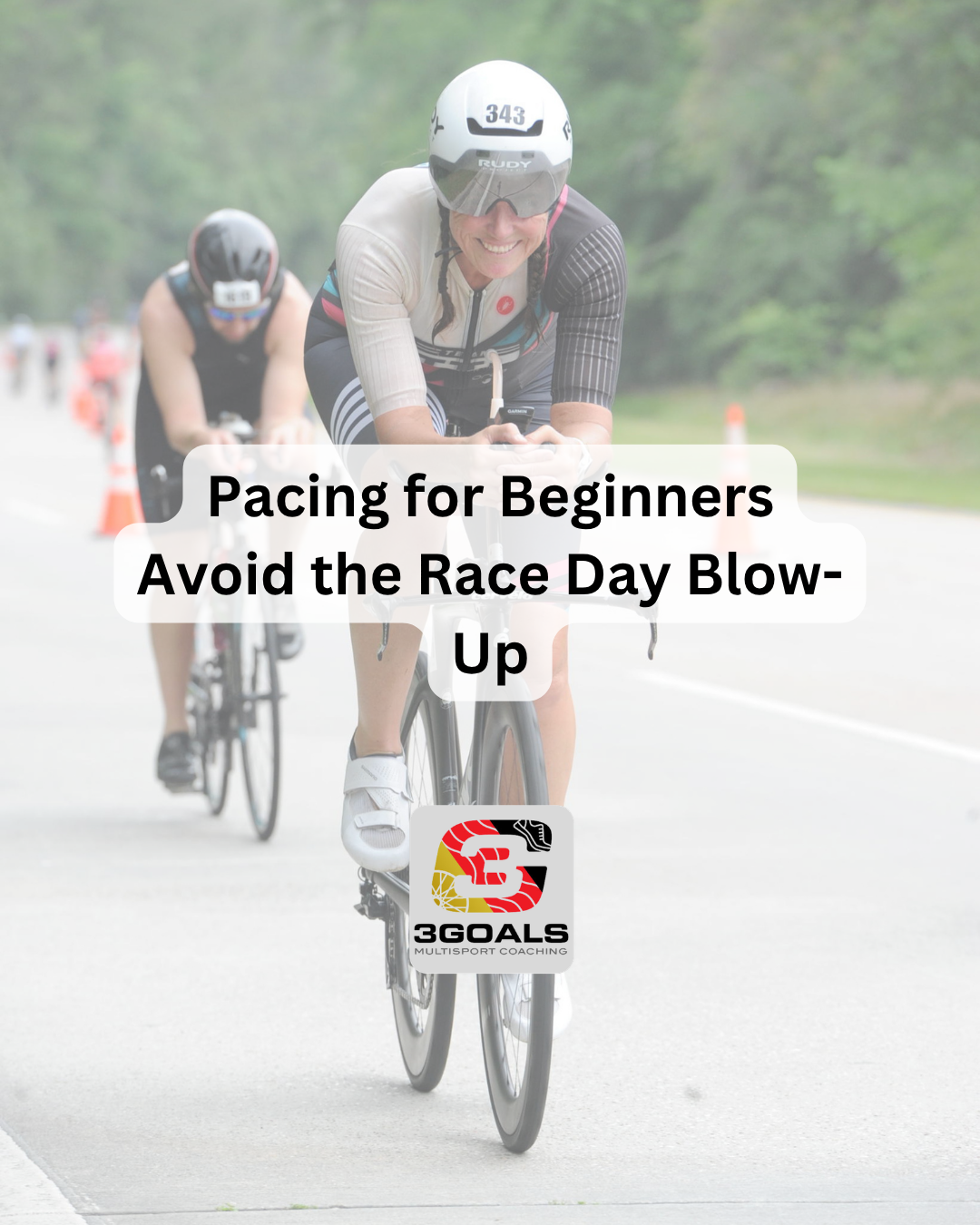
Pacing for Beginners: The #1 Way to Avoid Blow-Ups
Race day has a funny way of making athletes forget everything they know.
You feel good. The crowd is exciting. Other athletes are flying by. Your watch looks happy. Your brain says, “Maybe today is the day I’m magically faster than I’ve ever been.”
And that is exactly how the race day blow-up begins.
Pacing for beginners is not about holding back because you’re scared. It’s about racing smart enough to still have something left when the race starts to get hard.
Because in triathlon, the athlete who starts the strongest is not always the athlete who finishes the strongest.
What Is Pacing in Triathlon?
Pacing in triathlon means managing your effort across the swim, bike, and run so you can finish strong instead of burning through your energy too early.
Good pacing helps you stay in control of your heart rate, effort, nutrition, and mindset. Poor pacing usually feels exciting at first and terrible later.
That’s why beginners need a pacing plan before race day, not just a goal time.
The Biggest Beginner Pacing Mistake
The biggest mistake is treating race day like a test of how hard you can go right now.
The swim starts. You sprint.
The bike starts. You chase speed.
The run starts. You try to “hang on.”
That might work for a few minutes, but it usually catches up fast.
In triathlon, every discipline affects the next one. If you swim too hard, your bike feels harder. If you bike too hard, your run falls apart. If you ignore nutrition because you’re excited, your body will absolutely remind you later.
Race day rewards patience.
The Goal: Even Effort, Not Perfect Speed
For beginners, pacing should focus more on effort than speed.
Speed changes because of hills, wind, turns, road conditions, heat, and crowds. Effort is what you can control.
That means your race day plan should include:
- A swim effort you can sustain without panic
- A bike effort that feels controlled, not heroic
- A run effort that starts manageable and builds if you still feel strong
- A fueling plan you can actually follow while moving
This is why chasing bike speed is usually a trap. A fast bike split does not mean much if it turns your run into a survival shuffle. This is also where the ideas in None of Your Business connect perfectly: not every number deserves your attention on race day.
How to Pace the Swim
The swim is where a lot of beginners burn matches without realizing it.
The goal is not to win the first 200 yards. The goal is to get out of the water steady, calm, and ready to ride.
Start easier than you think you should. Let your breathing settle. Find space. Focus on rhythm.
A good beginner swim cue is:
Slow is smooth. Smooth is strong.
If you are anxious in open water, this matters even more. Panic pacing is real. Starting too hard can spike your breathing and make the entire swim feel harder than it needs to.
How to Pace the Bike
The bike is where many triathletes ruin their run.
You get out of the water, you feel relieved, and suddenly you are flying. Maybe you see a speed that looks exciting. Maybe someone passes you and you feel that little urge to respond.
Don’t.
The bike should feel like controlled work, not a time trial from the first mile.
For beginners, the best bike pacing plan is usually:
- Start the first few miles easier than goal effort
- Settle into a steady rhythm
- Avoid surging on hills or into wind
- Fuel early and consistently
- Save your legs for the run
If you have power or heart rate zones, use them. If not, use effort/RPE. You should be working, but not fighting.
This is where avoiding the gray zone matters. If you spend too much of the bike riding harder than planned but not hard enough to justify the cost, you can end up with the worst of both worlds: tired legs and no real payoff.
How to Pace the Run
The run is where pacing tells the truth.
If you paced the swim and bike well, the run may still be hard, but it will be manageable. If you overdid the first two legs, the run usually becomes damage control.
For most beginners, the smartest run plan is:
- Start slower than you want to
- Let your body adjust off the bike
- Keep breathing under control
- Use walk breaks early if they are part of your plan
- Build effort later if you feel good
The first mile off the bike is not the place to prove anything. It is the place to stay calm.
A strong race is not built by forcing the run early. It is built by giving yourself the chance to run well later.
Your Race Day Pacing Plan Should Be Simple
Your pacing plan does not need to be complicated.
In fact, simple is better.
Before race day, know:
- What effort you want for the swim
- What effort or zone you want for the bike
- How you want to start the run
- When you will fuel
- What you will do if things feel harder than expected
This is the same idea behind Race Day Calm. The more decisions you make before the race, the fewer decisions you have to make when your brain is tired.
Use the 3 Goals Method for Pacing
This is where the 3 Goals method is so helpful.
Instead of making race day all-or-nothing, set goals that give you multiple ways to succeed.
For pacing, that might look like:
Rockstar Goal: Execute your full pacing and fueling plan and finish stronger than expected.
Super Happy Goal: Stay steady on the bike and avoid going out too hard on the run.
Happy Goal: Use your pacing cue whenever you feel yourself getting pulled into someone else’s race.
That last one matters.
Because someone else’s pace is none of your business.
Your race plan is your business.
Beginner Pacing Cues to Use on Race Day
Pick one or two cues before race day so you have something to come back to when your brain gets loud.
A few good options:
- Start calm, finish strong.
- Smooth is fast.
- Stay in your race.
- Control the controllables.
- Don’t spend energy you still need.
Simple cues work because they interrupt the spiral. They bring you back to what matters.
The Real Win: Feeling Proud at the Finish
Good pacing does not mean the race will be easy.
It means you give yourself the best chance to handle the hard parts.
It means you do not turn the first half of the race into a celebration and the second half into punishment.
It means you race with purpose.
And for beginners, that is huge.
Because the goal is not just to finish. The goal is to finish knowing you made smart choices, stayed in your race, and gave yourself something to be proud of.
Ready for a Plan That Helps You Pace Smarter?
A strong race day starts long before race morning.
If you want a training plan built around your fitness, availability, and race date, start with a Join 3G TriDot Kickstart.
You do not need to guess your way through training. You need structure, consistency, and a plan that helps you show up prepared.
Beginner Triathlon Pacing FAQ
Keep Reading
If this helped, these posts are great next steps:
Leave a Reply