
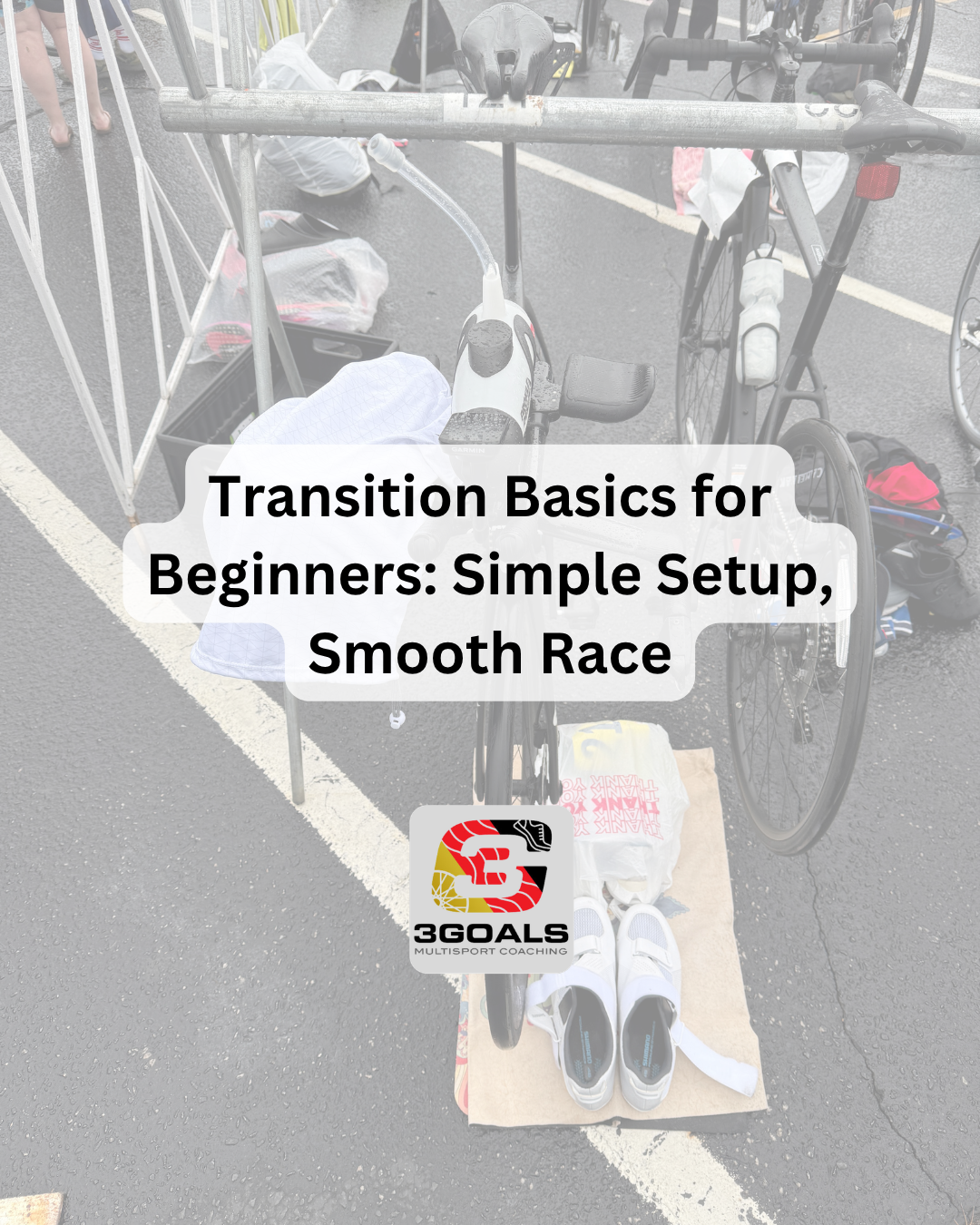
Transition Basics for Beginners: Simple Setup, Smooth Race
If you’re new to triathlon, transitions can feel like the part of the race that no one explains… until you’re standing barefoot in a parking lot wondering where you put your helmet.
Good news: you don’t need a complicated setup. You need a simple, repeatable system.
This post will give you beginner triathlon transition tips that actually work—so T1 and T2 feel calm, not chaotic.
Quick answer (so you don’t have to scroll)
The best transition setup is minimal: lay out only what you need, put things in the order you’ll use them, and rehearse the flow once or twice. A simple transition area prevents panic and makes your race smoother.
Key takeaways
- The goal of transition is calm and consistency, not speed.
- A simple “tiny footprint” setup beats a pile of stuff every time.
- Practice your transitions once or twice so race day isn’t your first time.
- Use a checklist so you don’t forget the one thing that ruins the morning.
What are T1 and T2?
In triathlon, you’ll have two transitions:
- T1: Swim → Bike
- T2: Bike → Run
The biggest beginner mistake is treating transitions like “bonus time” you don’t have to think about. Transition is part of your race. If you can stay calm there, you’ll race better everywhere else.
The beginner transition mindset: smooth beats frantic
A smooth transition is:
- fewer decisions
- fewer items
- fewer chances to forget something
- a repeatable routine
This is the same idea behind race day calm. If you haven’t read it yet, Race Day Calm: The Simple System That Prevents Panic pairs perfectly with this post.
Step 1: Know your transition “footprint”
Most races give you a small space. So your goal is a tiny footprint with big impact.
Here’s what you want in your footprint:
- one small towel or mat (I use an old yoga mat that I cut down)
- your helmet (placed upside down with straps open)
- sunglasses (inside helmet)
- shoes (bike shoes and/or run shoes depending on race)
- race belt + hat/visor for the run
- nutrition you plan to take (already attached to bike or in a pocket)
Everything else stays in your bag.
If you want the easiest checklist for this, use Triathlon packing list.
Step 2: Set up your transition area in the order you’ll use it
This is how to set up a transition area so your brain doesn’t have to think.
T1 setup order (swim to bike)
- Helmet (upside down, straps open)
- Sunglasses (inside helmet)
- Bike shoes (if you’re changing into them)
- Any “must-have” item you will actually use (one only)
Your T1 goal is:
Helmet on first, then move.
T2 setup order (bike to run)
- Run shoes (loosen laces or use quick laces)
- Race belt
- Hat/visor
- Any run fuel you need (already opened if possible)
Your T2 goal is:
Shoes on, grab belt, go. You can put on the belt and visor while you are leaving transition. The goal is to keep moving.
Step 3: Rehearse the flow (yes, even once helps)
Beginner triathletes often think transitions are something you either “get” or you don’t.
You get them by practicing.
Do this once at home:
- set up your gear
- walk through T1 in slow motion
- reset
- walk through T2
It takes 5 minutes and makes race day feel familiar.
Step 4: Keep it simple (what beginners don’t need in transition)
You don’t need:
- extra clothes “just in case”
- a full makeup kit
- 12 different nutrition items
- multiple towels
- spare everything
Every extra item increases the chance you:
- trip
- forget something
- lose time searching
- feel flustered
Simple is faster because simple is calmer.
If you’re someone who overthinks gear and “extras,” you’ll probably love None of Your Business: The Data That’s Wrecking Your Workouts too—same mindset, different problem.
Step 5: The “race day calm” transition checklist
Here’s a simple pre-race checklist that prevents 90% of issues:
- Helmet + sunglasses
- Bike ready (tires, brakes, chain)
- Bottles filled
- Nutrition attached/packed
- Shoes set
- Race belt + bib ready
- Watch charged
- Goggles/cap/wetsuit ready
- Know your swim exit and bike out direction
- Know your bike in and run out direction
If your race offers a transition map, look at it. I always like to walk the flow:
Swim in → rack → bike out
Bike in → rack → run out
Step 6: One huge mistake to avoid: “extra” training in race week
A lot of athletes try to calm nerves by doing more.
They’ll squeeze in:
- a longer run
- an extra hard bike
- a bonus swim
- “just to feel ready”
But extra training in race week usually creates fatigue and steals race day freshness.
If this sounds like you, read Stop Training Like Everyone Else: Why Your Plan Works (If You Let It).
Fresh beats fit. Every time.
Want a plan that makes race week (and transitions) easier?
A good plan builds confidence because it tells you exactly what to do—and what not to do—so you’re not inventing race week on the fly.
If you want a plan that helps you show up prepared and calm, start with Join 3G TriDot Kickstart
FAQs
More questions? Drop them in the comments.
What part of transition makes you most nervous—T1, T2, finding your rack, or remembering what to do first? Ask your question in the comments and I’ll help you simplify it.
Keep Reading (Recommended Next)
• Triathlon packing list
• Race Day Calm: The Simple System That Prevents Panic
• Stop Training Like Everyone Else: Why Your Plan Works (If You Let It)
• Join 3G TriDot Kickstart
Leave a Reply