
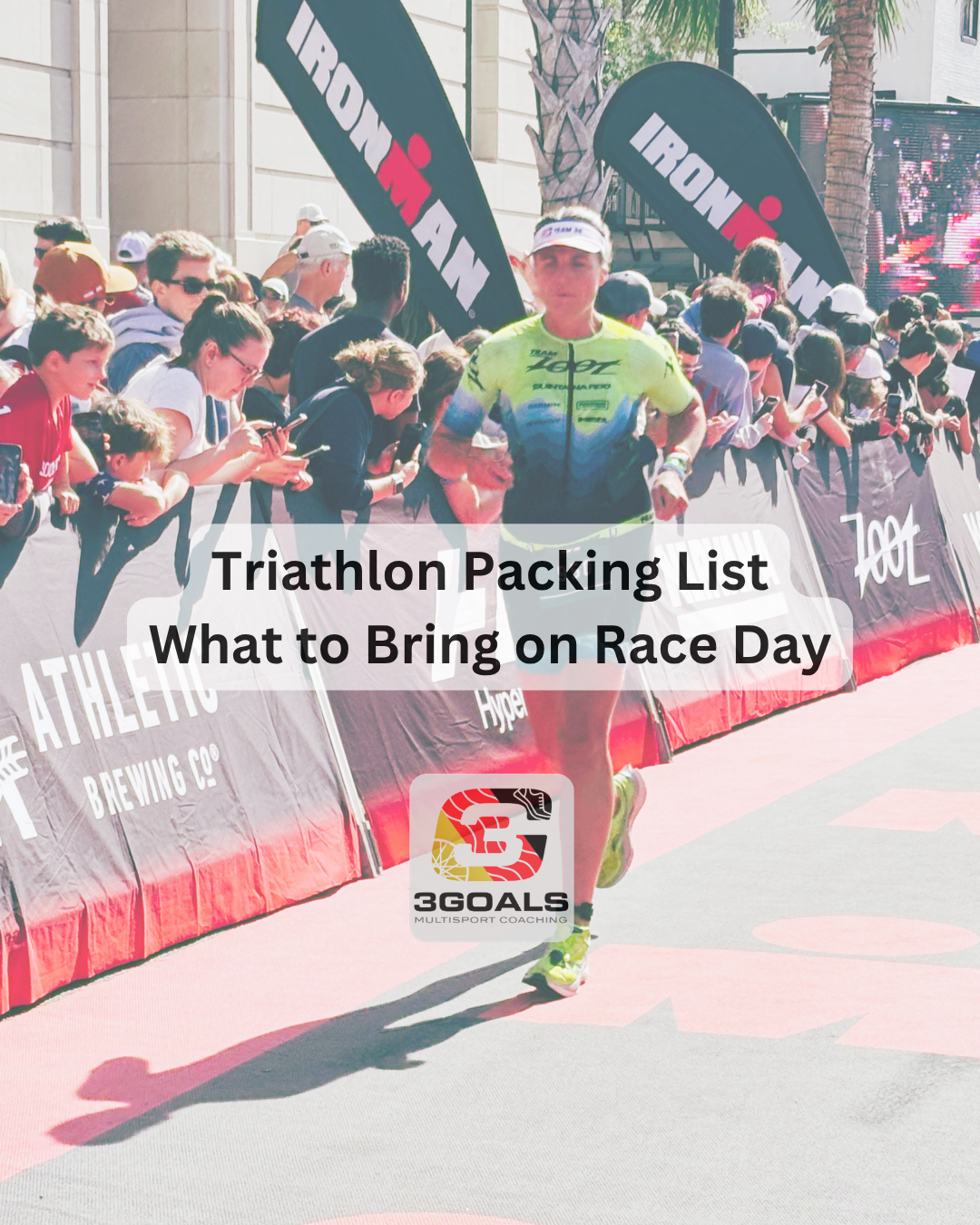
Triathlon Packing List: What to Bring on Race Day
Race morning is not the time to wonder where your goggles are.
Or your helmet.
Or your race belt.
Or the nutrition you practiced with during training and swore you would not forget.
A triathlon packing list helps you organize everything you need for race day so you can focus on swimming, biking, running, and staying calm instead of stressing over what might still be sitting on your kitchen counter.
Whether this is your first triathlon or your tenth, having a simple race day checklist is one of the easiest ways to reduce stress before you ever get to the start line.
Why You Need a Triathlon Packing List
Triathlon has more moving parts than most races.
You are not just packing running shoes and a bib. You need swim gear, bike gear, run gear, transition items, nutrition, hydration, weather backup options, and all the little things that make race morning smoother.
The goal is not to pack everything you own.
The goal is to pack what you actually need—and know where it is when you need it.
That is why I recommend packing early, checking everything twice, and using a printed list instead of trusting your race-week brain.
Race-week brain is not always your most reliable teammate.
Start With the Big Categories
The easiest way to pack for a triathlon is to organize your gear by discipline.
Think in categories:
- Swim
- Bike
- Run
- Transition
- Nutrition and hydration
- Race morning essentials
- Backup items
This keeps you from randomly throwing gear into a bag and hoping for the best.
Hope is not a packing strategy.
Swim Gear to Pack
Your swim gear is usually the first thing you will use on race day, so it needs to be easy to find.
Common swim items include:
- Goggles
- Backup goggles
- Swim cap
- Wetsuit, if allowed or needed
- Timing chip strap, if provided before the race
- Anti-chafe product
- Towel or small transition mat
Backup goggles are one of those things you may never need—until you really, really need them.
If open water makes you nervous, keeping your swim setup simple and familiar can help you stay calmer before the race starts.
Bike Gear to Pack
The bike portion has the most equipment, which means it also has the most chances to forget something important.
Common bike items include:
- Bike
- Helmet
- Bike shoes, if using them
- Sunglasses
- Flat repair kit
- Water bottles
- Bike computer or watch, if using one
- Nutrition for the bike
- Tire pump
- Race number stickers, if required
Here is the big one: your helmet should be packed with your bike gear and checked before you leave home.
No helmet, no race.
That is not the kind of race day lesson anyone wants to learn the hard way.
Run Gear to Pack
Run gear is usually simpler, but it still matters.
Common run items include:
- Running shoes
- Socks, if wearing them
- Race belt
- Hat or visor
- Sunglasses, if not already using them on the bike
- Run nutrition, if needed
- Watch, if using one
If the run makes you nervous, do not add extra friction by searching for your shoes in transition. Set them up clearly and keep your run gear simple.
The goal is to make the next step obvious when your brain is tired.
Transition Gear to Pack
Transition is where your packing list and race plan come together.
Your transition area does not need to look fancy. It needs to be organized enough that you know what comes next.
Helpful transition items include:
- Small towel or mat
- Race belt
- Extra socks
- Nutrition
- Water bottle
- Anti-chafe product
- Sunscreen
- Small bag for post-race items
If you are new to triathlon, read Transition Basics for Beginners so you understand how to set up your space without overcomplicating it.
Simple is good.
Simple is fast.
Simple is much easier to remember when race adrenaline is high.
Nutrition and Hydration
Do not wait until race morning to decide what you are going to eat and drink.
Your packing list should include the nutrition and hydration you practiced with in training.
That might include:
- Pre-race breakfast items
- Electrolytes
- Bike fuel
- Run fuel
- Extra water bottle
- Post-race snack
Race day is not the time to try a random gel you found in a race packet.
Practice what you plan to use, pack what you practiced, and keep it as boring as possible.
Boring nutrition is usually successful nutrition.
Race Morning Essentials
These are the things that do not always fit neatly into swim, bike, or run—but can make or break your morning.
Think about packing:
- ID
- Race confirmation or packet pickup info
- Phone
- Keys
- Parking details
- Cash or card
- Warm clothes for before the race
- Dry clothes for after the race
- Body marking supplies, if needed
- Any required race paperwork
If you are someone who gets nervous before a race, this is where planning ahead really helps.
The fewer decisions you have to make on race morning, the calmer you will feel.
That is the same idea behind Race Day Calm: make decisions before the race so you are not trying to solve problems when your brain is already busy.
Optional but Helpful Items
There are also a few “nice to have” items that can make race day smoother.
These may include:
- Extra towel
- Plastic bag for wet clothes
- Baby wipes
- Toilet paper
- Extra hair ties
- Safety pins
- Small first-aid items
- Portable charger
- Flip flops or easy shoes for before the race
You do not need to bring your entire house.
But a few smart extras can save you from unnecessary stress.
Pack the Night Before
The best time to pack for a triathlon is not race morning.
Pack the night before.
Better yet, start laying things out a few days before your race so you have time to notice what is missing.
A simple system:
- Lay everything out by category
- Check items off your list
- Pack your transition bag
- Prep bottles and nutrition
- Put race morning items somewhere obvious
- Do one final check before bed
You want to wake up thinking, “I know where everything is.”
Not, “Where did I put my goggles?”
Don’t Forget the Plan That Goes With the Gear
Packing well matters, but gear is only one piece of race day.
You also need to know:
- How you want to pace each discipline
- When you plan to fuel
- How you will move through transition
- What you will do if something feels harder than expected
If you are still building your race plan, Your First Tri Plan is a good place to start.
And if you want a training plan built around your fitness, availability, and race date, grab a Join 3G TriDot Kickstart so you are not guessing your way to race day.
Want the Printable Triathlon Packing List?
You do not have to recreate this from scratch.
Grab the free triathlon packing list so you can check off your swim, bike, run, transition, nutrition, and race morning items before your next race.
Because race morning is a lot more fun when you are not wondering what you forgot.
Triathlon Packing List FAQ
FAQs
Keep Reading
If this helped, these posts are great next steps:
- Transition Basics for Beginners
- Race Day Calm: The Simple System That Prevents Panic
- Your First Tri Plan: 8 Weeks to the Start Line Without Burning Out
- Join 3G TriDot Kickstart
Comment Below
What is the one race day item you are most afraid of forgetting?
Leave a Reply