
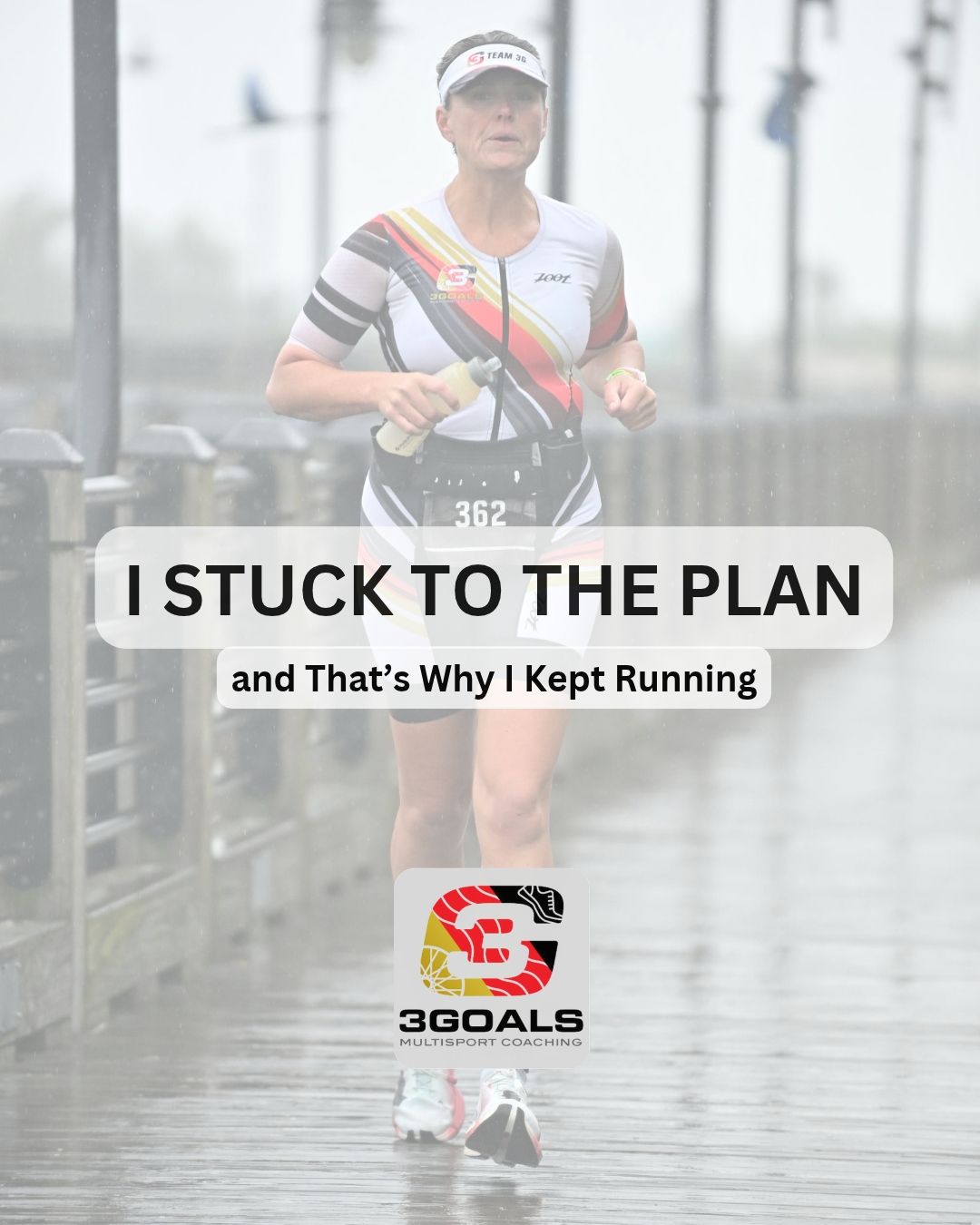
I Stuck to the Plan — and That’s Why I Kept Running
Running the whole way in a triathlon has been hard for me. And if I’m being honest, a big reason is that I usually overbike.
At North Carolina 70.3, I went in with a simple plan: ride in my planned Zone 3, start the run conservatively, walk the aid stations, and run slowly enough that I could keep running.
That last part mattered. I wasn’t trying to prove how fast I could run in the first few miles. I wanted to give myself the chance to keep running later.
I stuck to the plan. And with the crazy weather we had, getting to do that felt even sweeter.
A triathlon race plan starts before race morning
This is what I mean when I talk about race-day execution. Fitness gives you the tools. Race-day execution is how you express that fitness on the day.
You can arrive prepared and still make choices that make the back half of the race much harder. I know because I’ve done it. Feeling good on the bike can make it very easy to spend more than you planned, then wonder why the run feels so difficult.
The most useful decisions are the ones you make before you’re tired, emotional, or caught up in what everyone around you is doing. How will you pace the bike? What will you do when someone passes you? How will you start the run? When will you walk? When will you check in with yourself?
Your plan should be simple enough to remember while you’re racing. You don’t need a complicated document running through your head. You need a few clear decisions you can come back to.
The bike plan has to support the run you want
My Zone 3 target was my plan for this race. It isn’t a prescription for every athlete or every distance. The point is to choose an effort that fits your training, your race, and what you want to be able to do afterward.
Then let that plan guide you when the day gets distracting. Wind can make speed frustrating. Other athletes may go past you. You may feel good enough to convince yourself that a little more effort won’t matter.
Those are the moments when having already made the decision helps. Someone else passing you doesn’t change your plan. A slower speed into the wind doesn’t automatically mean you need to work harder.
For me, keeping the bike under control was part of the run plan. I had to make those decisions before I ever put on my running shoes.
Plan for feeling too good and feeling too bad
We tend to picture the hard moments when we think about needing a plan. But the really good moments can pull you off course, too.
Feeling great early can turn into negotiating: maybe I can ride harder, maybe I can run faster, maybe the plan was too conservative. That’s when I want you to remember that feeling good is not an emergency that needs fixing.
The other side is the moment when everything feels harder than you expected. One difficult stretch can make you question the whole day. Instead of deciding what the rest of the race will look like from that one moment, come back to the next manageable section.
Having a plan doesn’t mean ignoring conditions or refusing to adjust. It means making a deliberate choice instead of letting every feeling make the decision for you. Safety and what is actually happening on the course still come first.
Use planned check-ins to reset
One thing I coach my athletes to do is choose specific check-in points before the race. These can be based on distance or time. The important part is that you know when the next one is.
At each check-in, start with one question: Have I stuck to my plan?
If the answer is yes, and you’re at a point where your plan allows it, you can consider speeding up a little. Check how you’re feeling, what the conditions are doing, and how much race is still ahead of you. Following the plan is not an automatic instruction to go faster.
If the answer is no, use that point as a reset. Get back to your planned effort, return to your practiced fueling routine, and focus on executing until the next check-in. You don’t need to spend the next few miles beating yourself up about the last few.
For example, you might choose to check in at every mile marker on the run. Rather than negotiating with yourself constantly, you have a specific place to assess, adjust, and begin again. Choose the interval that makes sense for your race.
Run slowly enough to keep running
At North Carolina, the run decision was already made: start conservatively, walk the aid stations, and keep the running effort manageable.
Walking an aid station was part of the plan. It didn’t mean the plan had failed. And running slowly enough to continue running was something I had chosen ahead of time, rather than something I needed to argue with myself about in the moment.
That distinction helped. The goal wasn’t to win every mile. It was to put the miles together in a way I could sustain.
I’m proud that I kept running between the aid stations. Given how hard that has been for me, and the weather we raced in, that meant a lot.
Write the plan. Make the decisions. Practice the reset.
Before your next race, write down the few decisions that will matter most: your planned effort, your practiced fueling approach, how you’ll start the run, and what you’ll do when you feel better or worse than expected. Then choose your check-in points.
Keep it easy to remember. The plan should help you make fewer decisions on race day, not give you more things to worry about.
And if you get off plan? You still have the next check-in. Reset and give yourself another chance to execute.
For more on how pacing, fueling, and race-day decisions fit together, listen to Episode 11 of Coach Erin Says: Stop Guessing on Race Day.
Train with purpose. Race with confidence. Make yourself proud.
Leave a Reply