
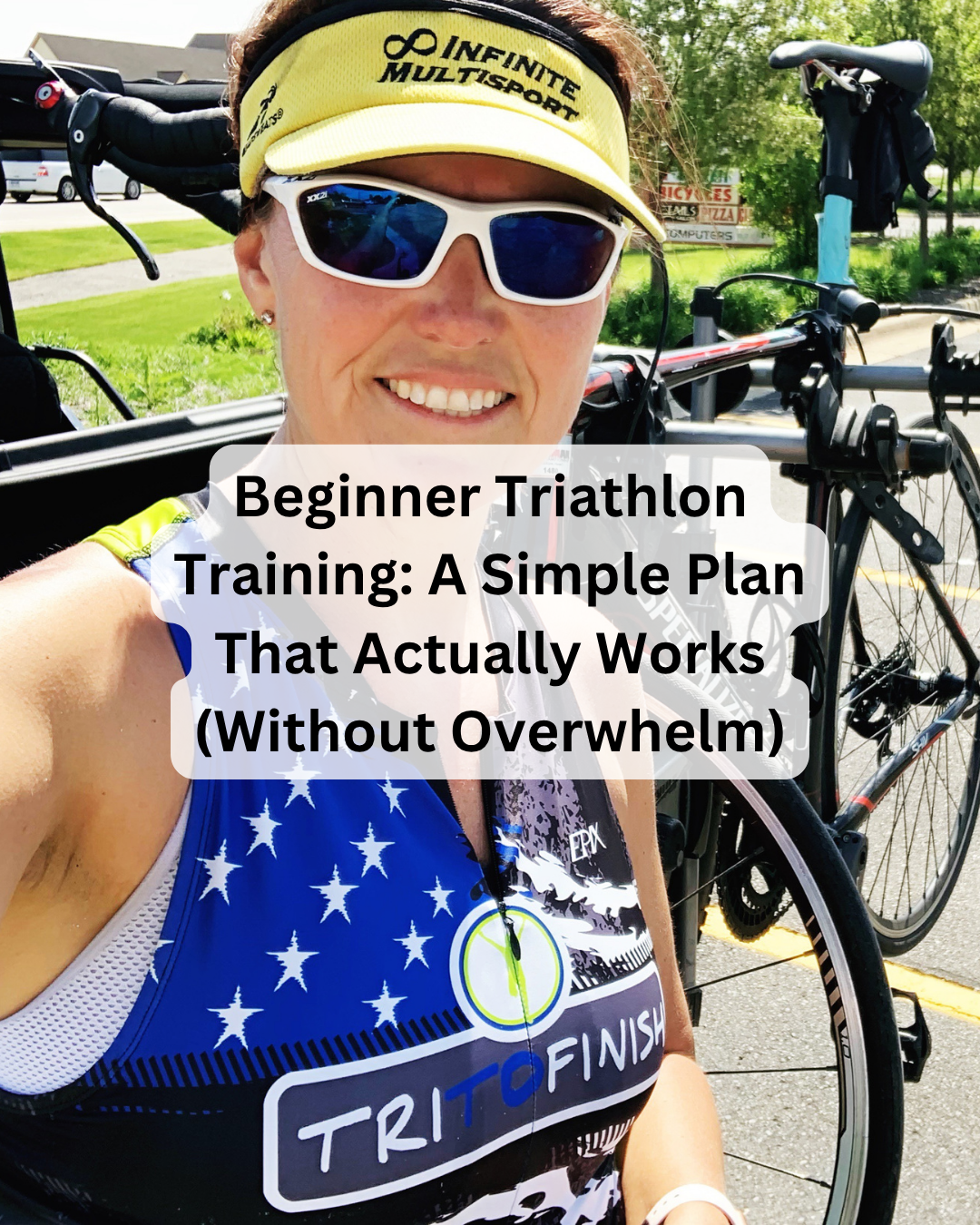
Beginner Triathlon Training: A Simple Plan That Actually Works (Without Overwhelm)
If you’re new to triathlon, it can feel like everyone else has the secret playbook… and you’re over here wondering what the heck you’re supposed to do on a random Tuesday.
Here’s the truth: you don’t need a complicated plan. You need a repeatable plan.
A beginner triathlon training plan works when it:
- builds consistency first
- keeps easy days easy (so you actually recover)
- adds just enough “hard” to improve
- progresses gradually so your body adapts instead of breaking down
A beginner triathlon training plan works best when it’s simple: 2 swims, 2 bikes, and 2 runs per week, mostly easy Zone 2 training with 1–2 short purposeful efforts. Build consistency first, increase time gradually, and you’ll gain fitness without burnout.
Key takeaways
- Most beginners need consistency, not complexity.
- Keep most training easy (Zone 2) and add small purposeful intensity.
- Build volume slowly and use recovery weeks every 3–4 weeks.
- Use simple tools like Triathlon packing list, Fear Free Swim Plan, and Join 3G TriDot Kickstart if you want a plan that removes guesswork.
Who this plan is for
This is for you if you’re:
- training for your first sprint triathlon (or “starting again”)
- busy and want a plan that fits real life
- overwhelmed by gear, metrics, and conflicting advice
- nervous about the swim or transitions
- determined to finish proud, not fried
This is triathlon training for beginners who want clarity and confidence, not chaos.
If that’s you, you might also love New Triathlete Starter Kit: Start Here (Don’t Overthink It).
The beginner triathlon training mindset that actually works
Most beginners think the key is pushing harder.
The truth: the key is showing up consistently.
If you take one mindset into triathlon training, make it this:
You don’t need perfect weeks. You need repeatable weeks.
If you’ve been waiting to “feel motivated,” read Stop Chasing Motivation: The February Plan That Builds Real Momentum. It’ll save you.
What “good” triathlon training should feel like (especially as a beginner)
This is important because beginners often drift into the “kind of hard” middle.
Your training should feel like:
- most sessions = controlled, conversational, sustainable (you finish feeling like you could do more)
- a few sessions = clearly harder, but short and purposeful (you can recover from it)
- your overall week = manageable, not life-consuming
If you’re always training “medium hard,” you’re likely stuck in the gray zone: not easy enough to recover, not hard enough to improve. That’s exactly what we break down in Not Easy Enough to Recover, Not Hard Enough to Improve: The Gray Zone Trap.
The simple weekly structure (the one I use with beginners)
Most beginners do best with 6 sessions per week (you can scale to 4–5 if needed):
The “standard” beginner week (6 sessions)
- Swim x 2
- Bike x 2
- Run x 2
- Strength/mobility x 1–2 (optional but strongly recommended)
That’s it. You’re not “behind” if your week doesn’t look epic. You’re building a base.
Your training plan isn’t just about workouts—it should also teach you how to fuel those workouts properly. If you’re not sure where to start, this guide on How to Fuel Your First Triathlon: A Simple Plan for Beginners will help you build energy and confidence alongside your fitness.
A sample beginner triathlon training week (copy/paste structure)
Here’s a realistic template you can follow. This first triathlon training schedule is a simple starting point you can repeat while you build consistency.
Monday
Easy Swim (technique + relaxed aerobic)
Tuesday
Easy Run (Zone 2) + short strength (10–20 min)
Wednesday
Bike (endurance ride, Zone 2)
Thursday
Swim (skills + a few faster efforts) OR Run with strides (short speed, controlled)
Friday
Rest or mobility
Saturday
Bike (a little longer, steady) + optional short “brick” run (10–15 min easy)
Sunday
Longer Run (easy and steady)
This is the rhythm: consistency + endurance + a small dose of intensity + recovery.
How to progress your training (without overdoing it)
Beginners don’t need massive volume jumps. You need a slow build.
Simple progression rules
- Add time gradually (5–10% total weekly time is plenty)
- Increase only ONE thing at a time (either duration OR intensity OR frequency)
- Every 3–4 weeks, reduce volume a bit (recovery week)
If you’re wondering how to train for a sprint triathlon, this progression is the answer: repeatable weeks that slowly build fitness without burning you out.
What to focus on in each sport
Swim (the confidence builder)
Most beginners struggle here—not because they’re weak, but because the swim is mental.
Your swim focus as a beginner:
- relaxed exhale
- steady rhythm
- basic form (body position, smooth stroke)
- comfort first, speed later
If the swim makes you anxious, start with Fear Free Swim Plan. The fastest way to improve is to stop fighting the water.
Bike (your biggest fitness “bang for buck”)
The bike is where you can build a ton of endurance with low injury risk.
Beginner bike focus:
- steady Zone 2 endurance
- smooth cadence
- learn to ride “boring steady” (that’s a race-day superpower)
- don’t chase speed (wind and hills will mess with you)
If you’re a data junkie and your screen keeps messing with your head, read None of Your Business: The Data That’s Wrecking Your Workouts.
Run (durability and patience)
Most beginners run too hard too often.
Beginner run focus:
- keep easy runs truly easy
- build duration slowly
- add strides (short, fast-but-relaxed) before you add long hard workouts
- walk breaks are allowed (and smart)
For heart-rate runs: don’t show pace. Don’t negotiate. Just stay in the zone.
Strength training (the “insurance policy” beginners skip)
You don’t need to live in the gym, but you do need durability.
2 short sessions per week is enough:
- hips/glutes
- calves
- core
- basic mobility
Even 10–15 minutes counts. Consistency beats perfection.
The biggest beginner mistakes (and how to avoid them)
1) Buying everything instead of training consistently
If you want the “what to buy / what not to buy” breakdown, read Don’t Waste Your Money on Triathlon: What Beginners Don’t Need (and What’s Worth It).
2) Turning easy days into moderate days
That’s the gray zone trap. It feels productive but stalls progress.
3) Comparing your training to someone else’s
Your plan should match your life, your background, your recovery, your goals.
If you need this reminder in bold: read Stop Training Like Everyone Else: Why Your Plan Works (If You Let It).
4) Overcomplicating race week
The easiest way to feel calm on race morning is to use a checklist.
Get the Triathlon packing list and print it during race week.
Want the simplest “next step”?
If you want a plan that updates intelligently, keeps intensity where it belongs, and removes the daily guesswork, start with Join 3G TriDot Kickstart.
That’s the easiest way to go from “I’m overwhelmed” to “I know exactly what I’m doing today.”
Want ongoing help adapting your training to your goals and schedule? Explore online triathlon coaching with 3 Goals Multisport for personalized guidance, feedback, and accountability.
FAQs
How many days per week should a beginner triathlete train?
Most beginners do well with 4–6 sessions per week. Consistency matters more than volume.
How long should a beginner triathlon training plan be?
Most beginner plans work best over 6–12 weeks. Longer plans usually build more durability and confidence.
Is it okay to do a sprint triathlon with minimal training?
It depends on your background and goals, but most people enjoy the experience more when they train consistently for at least 6–8 weeks.
What’s the best training zone for beginners?
Most training should be easy aerobic (Zone 2). That’s where you build endurance, recover well, and stay consistent.
What if I’m scared of the swim?
You’re not alone. Start in the pool and build confidence step-by-step. Use Fear Free Swim Plan to reduce anxiety and create a simple progression.
Do I need to do brick workouts as a beginner?
They can help, but you don’t need a lot. A short easy run (10–15 minutes) after a bike once in a while is plenty.
More Questions? Drop them in the comments.
If you’re new to triathlon, I promise you: you’re not the only one thinking, “Am I doing this right?”
Ask your questions in the comments—training schedule, swim nerves, pacing, gear, race day logistics—any of it—and I’ll help point you in the right direction.
Keep Reading (Recommended Next)
• Beginner Triathlon Starter Kit: Start Here (Don’t Overthink It)
• Don’t Waste Your Money on Triathlon: What Beginners Don’t Need (and What’s Worth It)
• Triathlon packing list
• Join 3G TriDot Kickstart
Leave a Reply