
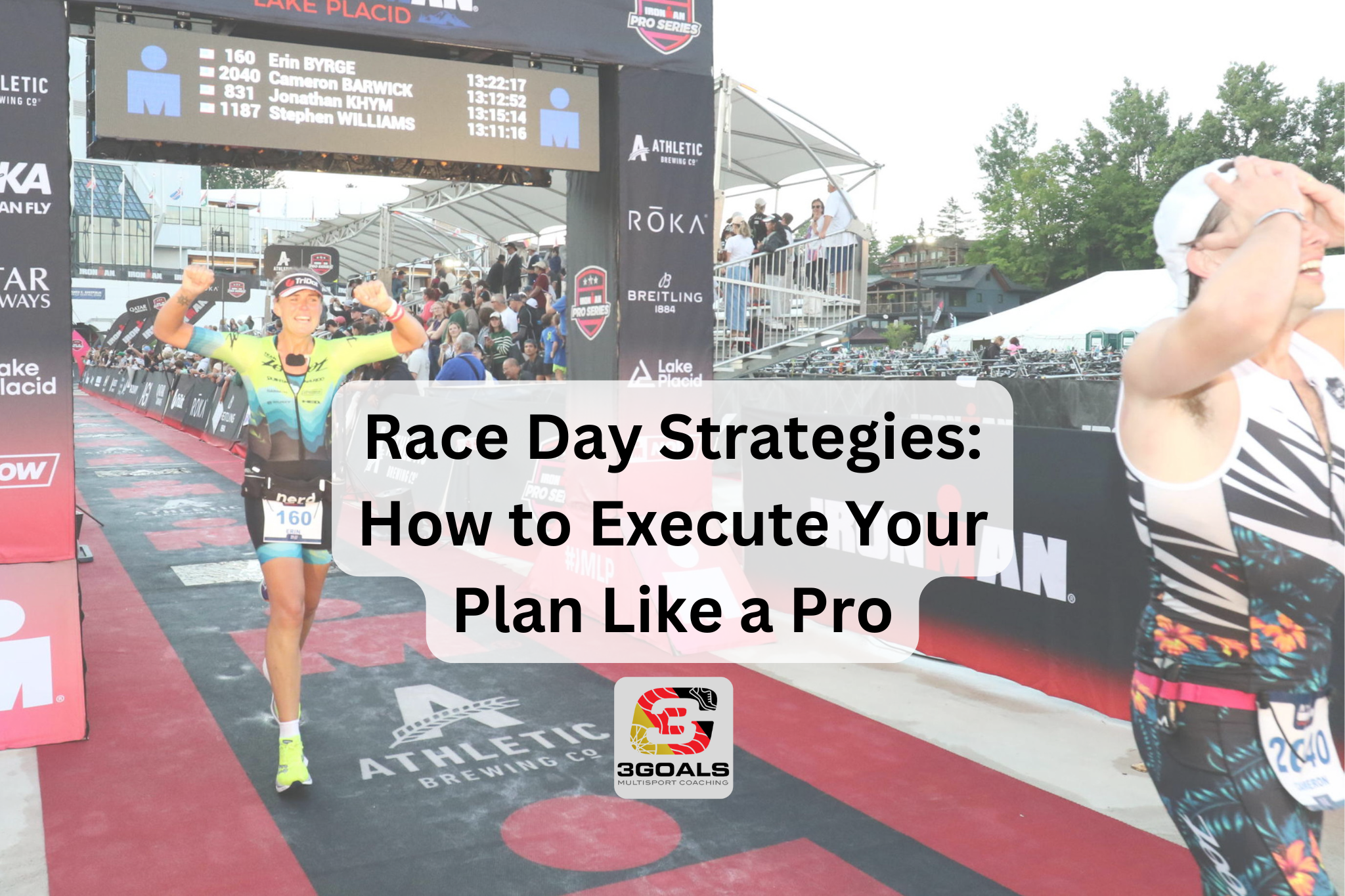
Race Day Strategies: How to Execute Your Plan Like a Pro
You’ve trained for months. You’ve practiced transitions, nailed your long bricks, tested your fueling, and visualized that finish line. But even with all that preparation, one thing stands between you and your best performance: race day execution.
Whether it’s your first sprint or your tenth 70.3, how you execute your race plan can make or break your day. Being fit is one thing. Being smart under pressure? That’s what separates strong finishers from burned-out survivors.
Let’s walk through the key components of a race day strategy that works—and how to stick to it when it counts.
🧠 Start With a Plan—Built on Your Data
Every good race starts with a plan that reflects your fitness, goals, and experience—not someone else’s.
Your pacing, nutrition, and effort targets should be tailored to you, which is where tools like RaceX by TriDot come in. RaceX generates personalized pacing and power targets based on course terrain, weather conditions, and your physiological profile (source). It takes the guesswork out of execution and allows you to race with confidence.
🚴 5 Elements of a Pro-Level Race Strategy
1. Pacing: Be Disciplined Early
Start easy. Seriously. No matter how great you feel when the gun goes off, sticking to your target pacing zones early in the race will pay off tenfold in the second half.
💡 Pro tip: Think of the swim and first half of the bike as the “setup” phase—not the time to win the race.
2. Fueling: Follow the Plan
Don’t wing it. Race-day nutrition should be dialed in during training—when, what, and how much to eat and drink. Most athletes under-fuel or forget entirely during transitions or bike segments.
✅ Aim for 30–60g of carbs per hour for shorter races, 60–90g/hour for longer efforts.
✅ Hydrate early and consistently.
3. Transitions: Smooth = Fast
Set up your gear with intention. Mentally rehearse each transition. Speed doesn’t always come from rushing—it comes from not fumbling.
✔️ Layout matters.
✔️ Don’t try something new.
✔️ Have a checklist and walk through it in the morning.
4. Adaptability: Plan A, B… and C
You can have the best plan in the world—but race day brings surprises. Wind. Heat. Gear malfunctions. GI distress.
The key is staying calm and clear-headed. Adaptation is a strength. Learn to reassess and adjust without unraveling mentally.
5. Mindset: Focus Forward
The mental game on race day is just as important as fitness. Use mantras, segment your race into small wins, and talk to yourself like you would a teammate: firm, focused, and encouraging.
⏱️ Race Week Checklist: Set Yourself Up for Success
- ✅ Final gear check and flat kit
- ✅ Confirm nutrition and hydration plan
- ✅ Rehearse transitions
- ✅ Review course maps and elevation profiles
- ✅ Walk through race morning logistics
- ✅ Get 2–3 solid nights of sleep earlier in the week (not just the night before)
💬 Final Thoughts: Trust + Execute
The best races don’t happen because everything went perfectly. They happen because the athlete had a plan—and executed it with discipline, focus, and flexibility.
Your training got you to the start line. Now your mindset and race-day execution will carry you to the finish.
So breathe deep. Trust your plan. Execute like a pro. 🏊♀️🚴♂️🏃♀️💥
Leave a Reply